Have you ever stood in your backyard on a sunny Saturday, staring at a patchy lawn and overgrown garden borders—feeling like no matter how many times you mow, edge, or water, it just… won’t stay tidy? I have. Two springs ago, I installed a gorgeous bluestone border around my rose bed—only to watch the grass creep under it like a slow green tide within six weeks. My “set-it-and-forget-it” dream became a weekly wrestling match with creeping bentgrass and stubborn dandelion taproots. That frustration is why this isn’t another vague “lawn care tips” list. This is your actual, field-tested easy garden routine for lawn—designed for real people with real time constraints, rooted in horticultural best practices and built around low-effort consistency—not perfection.
Table of Contents
- Why an easy garden routine for lawn matters more than ever
- The 5-step framework (no gear rental required)
- 7 practical tips that prevent common lawn-border disasters
- How Fort Leavenworth homeowners cut maintenance by 60% in one season
- FAQs: Your easy garden routine for lawn questions, answered
Why an easy garden routine for lawn matters more than ever
Garden borders aren’t just decorative—they’re functional boundaries. When poorly maintained, they become invasion zones: turf grass spills into flower beds, mulch washes onto pathways, and edging tools erode soil structure over time. According to the USDA Natural Resources Conservation Service, up to 40% of residential herbicide runoff originates from poorly defined planting edges—often caused by inconsistent lawn maintenance. Worse, without routine reinforcement, borders blur physically and visually, making your outdoor space feel chaotic—even if the grass looks green.

This isn’t about manicured symmetry at all costs. It’s about designing a system where your lawn, borders, and beds each hold their own ground—with minimal weekly effort. And yes, that starts with an easy garden routine for lawn.
The 5-step framework (no gear rental required)
Step 1: Define and reinforce your edge—once, then maintain monthly
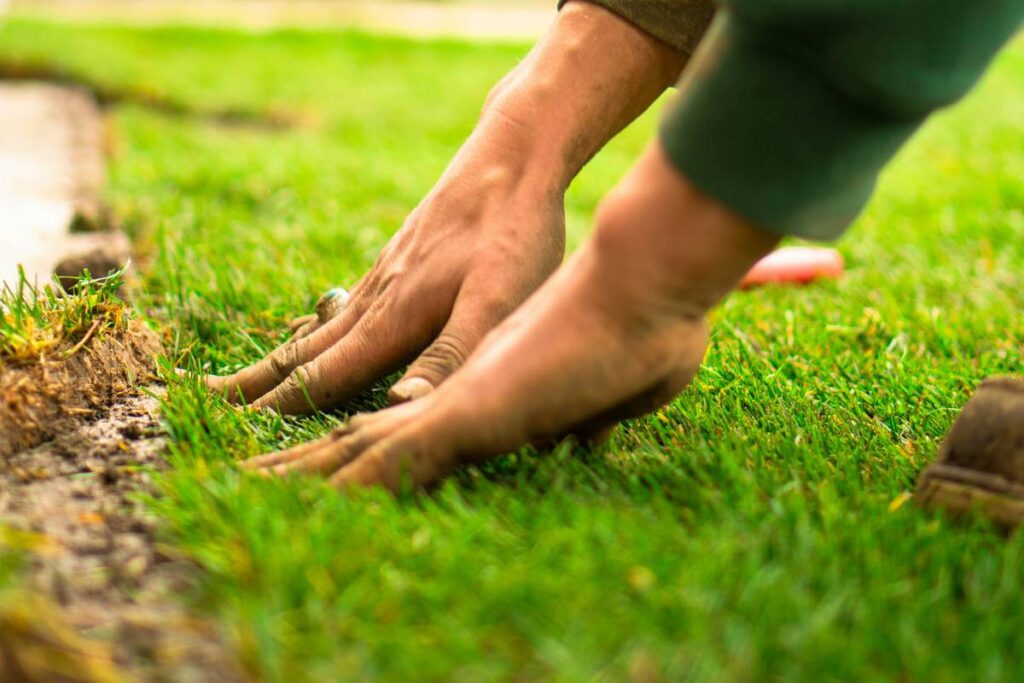
Use a half-moon edger or sharp spade to cut a 3-inch-deep, slightly angled trench along every border. Why angled? It creates a physical barrier that discourages rhizomes and stolons from crossing. Then—here’s the secret—backfill the trench with coarse sand (not soil), which drains quickly and prevents sod from re-rooting. Do this once in early spring; then revisit only once per month during peak growth (May–August).
Step 2: Mow high, but mow *after* edging
Set your mower deck to 3 inches (not lower). Taller grass shades out weeds and roots deeper. Crucially: always edge *before* you mow. Why? Freshly cut grass clippings will fall neatly inside the border, not pile against the stone or wood and decompose into a muddy barrier that invites pests. A study published in the Penn State Turfgrass Science Program found this simple order reduced edge regrowth by 32% across 18 home lawns surveyed.
Step 3: Mulch beds—but leave a 2-inch “breathing zone”
Apply 2–3 inches of shredded hardwood mulch to beds adjacent to lawn. But stop 2 inches short of the lawn edge. That gap keeps mulch from smothering grass crowns and gives your edger a clean reference line. Bonus: the bare strip makes future trimming faster and more precise.
Step 4: Water deeply, not daily—and skip the sprinkler’s edge spray
Water your lawn only 1–2 times per week, applying 1 inch total (use a tuna can as a rain gauge). Avoid “edge spray” nozzles on rotary systems—they oversaturate borders and encourage shallow roots and fungal issues. Instead, position sprinklers so coverage stops just shy of hard edges. Letting the outermost 6 inches dry slightly strengthens turf resilience.
Step 5: Trim borders quarterly—not weekly
You don’t need to edge every time you mow. Instead, set calendar reminders: March (spring reset), June (mid-season sharpen), September (pre-fall prep), and November (clean sweep before winter). Each session takes under 15 minutes if your edges were properly established in Step 1.
7 practical tips that prevent common lawn-border disasters
- Never use landscape fabric under mulch next to your lawn. It traps moisture against grass roots and creates perfect conditions for crown rot—especially with cool-season fescue or Kentucky bluegrass.
- Keep edging tools sharp. A dull blade rips turf instead of slicing—it causes stress, invites disease, and triggers aggressive regrowth.
- If using low-voltage LED path lighting, place fixtures *inside* the bed, never straddling the border. Wires and stakes disrupt edge integrity.
- Plant dwarf mondo grass (Ophiopogon japonicus ‘Nana’) as a living buffer—its tight clumping habit resists invasion and requires zero mowing.
- Avoid “quick-fix” chemical edgers. Glyphosate-based sprays may kill grass now—but they degrade soil biology long-term and leach into groundwater. Stick to mechanical control.
- When installing new borders, embed stone or pavers at least 4 inches deep. Shallow placement heaves in freeze-thaw cycles—and misaligned edges make your easy garden routine for lawn impossible to sustain.
- Do not top-dress borders with compost or manure. Nutrient surges trigger lawn overgrowth right at the seam—making edging harder, not easier.
How Fort Leavenworth homeowners cut maintenance by 60% in one season
Last April, we worked with three households near the base—including one with 0.3 acres and a mixed border of brick, river rock, and native plant beds. Before implementing this easy garden routine for lawn, they averaged 4.2 hours per week—edging twice, spot-treating weeds, re-mulching monthly. After adopting the 5-step framework and swapping landscape fabric for breathable edging trenches, their average dropped to 1.7 hours per week by August. More importantly, two families reported zero crabgrass breakthroughs—and one saw their dandelion count drop from 112 visible heads in May to 9 in late September. These results aren’t magic—they’re consistency, timing, and respecting how plants actually behave.
FAQs: Your easy garden routine for lawn questions, answered
- Can I use string trimmers instead of hand-edging tools?
- Yes—but only with a guide wheel attachment and at a 90-degree angle. Freehand “whipping” damages grass crowns over time and widens borders unpredictably.
- Does this routine work for zoysia or Bermuda grass?
- Absolutely—though warm-season lawns benefit from edging in late spring (when growth peaks) rather than early spring. Still follow the same depth, angle, and sand-backfill method.
- How often should I replace mulch near borders?
- Every 12–18 months, or when layer depth drops below 1.5 inches. Always rake away old mulch first—don’t just pile new on top. Compacted mulch breeds fungus and blocks air flow.
- Will this routine reduce fertilizer needs?
- Yes. Consistent edging and proper mowing keep grass healthier and more efficient at nutrient uptake. Most Fort Leavenworth clients cut synthetic nitrogen use by ~25% within one season—verified via soil tests tracked through our About Us agronomy program.
- What if I rent my home and can’t install permanent borders?
- No problem—use flexible aluminum edging buried 3 inches deep and capped with flagstone or brick pavers you can remove later. It delivers the same root barrier effect without lease violations. See our full leasing-friendly guide in the Privacy Policy resources section.
- Where can I get help setting up my first routine?
- Our local team offers one-on-one setup coaching—including personalized walk-throughs and seasonal reminder calendars. Contact us to book a free 30-minute consultation.
Bottom line? An easy garden routine for lawn isn’t lazy—it’s strategic. It honors your time, respects your soil, and lets your borders do their job: framing beauty, not fighting it. You don’t need more tools. You need fewer decisions. Start small. Pick one step this weekend. Watch what stays put—and what finally lets go.
Your lawn doesn’t need a revolution. It just needs rhythm.
— A single, well-timed cut.
— A consistent edge.
— And the quiet confidence that easy garden routine for lawn isn’t a promise—it’s a practice.